

The most common warning signs of a clogged dryer vent are clothes taking longer to dry, unusually high dryer temperatures, weak airflow at the outdoor exhaust, excess lint around the vent, and burning odors. Other symptoms include moisture collecting near the dryer, restricted-airflow warning lights, and repeated overheating shutdowns. These problems should be investigated promptly because a blocked exhaust duct can affect drying performance and increase fire risk.
A conventional vented clothes dryer removes moisture by circulating heated air through wet laundry and discharging the warm, humid air outside. The exhaust duct connects the appliance to an exterior vent hood. As clothes tumble, small fibers separate from fabrics and become lint. Although the lint screen captures much of this material, some lint can enter the exhaust duct and accumulate over time.
A blocked dryer vent restricts the amount of air leaving the appliance. This can cause longer drying times and additional heat buildup. Recognizing early warning signs helps homeowners address the problem before it becomes more serious.
Why Do Dryer Vents Get Clogged?
Lint accumulation is a common cause of restricted dryer exhaust airflow. However, a vent can also become blocked by a crushed duct, animal nest, damaged exterior cover, or poor installation. A kinked or torn connector behind the appliance calls for dryer vent hose repair before anything else is checked.
Long exhaust runs containing several bends may be more difficult to keep clear. Improper foil or plastic duct materials can also collapse or collect lint more readily than approved smooth metal ducts. The National Fire Protection Association (NFPA) recommends keeping dryer exhaust pipes clear and using suitable rigid or flexible metal venting. The dryer manufacturer's installation instructions determine the permitted configuration.
Common Warning Signs of a Clogged Dryer Vent
| Warning Sign | Possible Explanation | Recommended Action |
|---|---|---|
| Clothes take too long to dry | Reduced moist-air exhaust | Inspect lint screen and vent |
| Dryer unusually hot | Restricted airflow and heat buildup | Stop using until evaluated |
| Burning odor | Overheated lint or components | Stop immediately |
| Weak outdoor airflow | Obstructed exhaust passage | Arrange inspection and cleaning |
| Exterior flap not opening | Blockage or damaged damper | Inspect and correct |
| Excess lint at outside hood | Accumulated or escaping lint | Clean and assess duct |
| Moisture around dryer | Humid air not exhausting properly | Check vent and connections |
| Check-vent warning light | Detected airflow restriction | Follow manufacturer guidance |
| Repeated overheating shutdown | Dryer safety controls activating | Stop and request service |
These symptoms are indicators rather than definitive diagnoses. Some can also occur because of appliance faults or improper laundry loading.
1. Clothes Take Longer Than Normal to Dry
Longer drying times are among the clearest signs of restricted exhaust airflow. Whirlpool identifies this as the most common indicator of a blocked household dryer vent. When humid air cannot leave efficiently, moisture remains in the drum longer. Clothes may still feel damp after a cycle that previously dried similar loads completely.
Before assuming the exhaust is clogged, check the lint screen and confirm that the load is not excessively large. If the problem continues, the vent system should be inspected.
2. The Dryer Feels Unusually Hot
A dryer naturally becomes warm during operation. However, excessive cabinet heat can indicate that airflow is restricted and heat is not being discharged normally. Whirlpool lists an unusually hot exterior as a warning sign of blocked venting. Restricted airflow can also contribute to operation outside normal temperature conditions.
Stop using a dryer that becomes abnormally hot, particularly if the condition is new or worsening. Do not continue running repeated cycles to compensate for poor drying.
3. You Notice a Burning Smell
A burning or scorching odor is a serious warning. It may involve overheated lint, an electrical problem, or another appliance fault. The source cannot be determined safely from the smell alone. Turn the dryer off immediately. If smoke or fire is visible, evacuate and contact emergency services. Do not restart the appliance until the cause has been identified and corrected.
A burning smell should never be treated as an ordinary maintenance reminder.
4. Airflow Is Weak at the Outdoor Vent
The exterior dryer vent hood should allow exhaust air to leave while the dryer operates. A noticeable reduction in airflow can indicate a blockage somewhere along the duct. When it is safe and accessible, homeowners can observe the vent hood from outside during normal operation. Avoid touching hot metal surfaces or reaching inside a running exhaust opening.
Weak airflow can also result from a crushed connector behind the appliance or a malfunctioning blower. Professional inspection can identify the restriction.
5. The Exterior Vent Flap Does Not Open
Many exterior dryer hoods contain a damper that opens when exhaust air leaves the duct. A flap that remains closed may be blocked by lint, debris, or an animal nest. The NFPA recommends confirming that the outdoor exhaust flap opens during dryer operation. A stuck or damaged damper may also need repair or replacement.
Do not install a screen across the dryer exhaust outlet. Screens can collect lint and create an additional blockage.
6. Lint Collects Around the Exterior Opening
Visible lint around an exterior vent may indicate deposits near the termination. Small amounts of lint can sometimes be visible, but substantial buildup warrants inspection. Removing lint at the outside opening may not clear the entire duct. Deposits can also accumulate at elbows, joints, and other concealed sections.
A proper cleaning should address the full exhaust route rather than only the accessible vent hood.
7. Excess Moisture Appears in the Laundry Area
When humid exhaust air cannot leave normally, moisture may accumulate inside the appliance or around damaged connections. Whirlpool identifies condensation and water accumulation as possible symptoms of restricted venting. Dampness can also result from unrelated plumbing or appliance problems.
Inspect for visible leaks and avoid operating the dryer when the exhaust system is damaged. Persistent moisture should be investigated rather than covered with sealant.
8. The Dryer Displays a Vent Warning
Some modern dryers include airflow-monitoring features that display messages or warning lights when the vent becomes restricted. The warning wording varies by manufacturer and model. Whirlpool, for example, provides guidance for dryers displaying a Check Vent alert.
Consult the appliance manual for the correct interpretation. Cleaning the lint screen alone may not resolve a blockage farther inside the exhaust duct.
9. The Dryer Shuts Off Unexpectedly
A dryer may stop or interrupt heating because protective controls detect abnormal temperatures. Restricted ventilation can be one possible cause. However, unexpected shutdowns can also result from thermostat, sensor, motor, or electrical problems. A clogged vent should not automatically be assumed responsible.
If overheating is suspected, stop using the dryer until it has been inspected. Repeatedly restarting the appliance is not an appropriate solution.
How Can You Check for a Clogged Dryer Vent?
Begin with observations that do not require dismantling the appliance.
- Stop the dryer if overheating or burning odors are present.
- Inspect and clean the lint screen.
- Check for obvious crushing behind the appliance.
- Inspect the exterior hood from a safe location.
- Look for lint, nesting material, or a blocked damper.
- Review any airflow warning displayed by the appliance.
- Arrange professional testing when the cause remains unclear.
Do not operate the dryer with its exhaust disconnected to test performance. A gas dryer presents additional combustion safety concerns, and all conventional vented dryers need their exhaust properly connected during normal use.
How Do Professionals Clean a Clogged Dryer Vent?
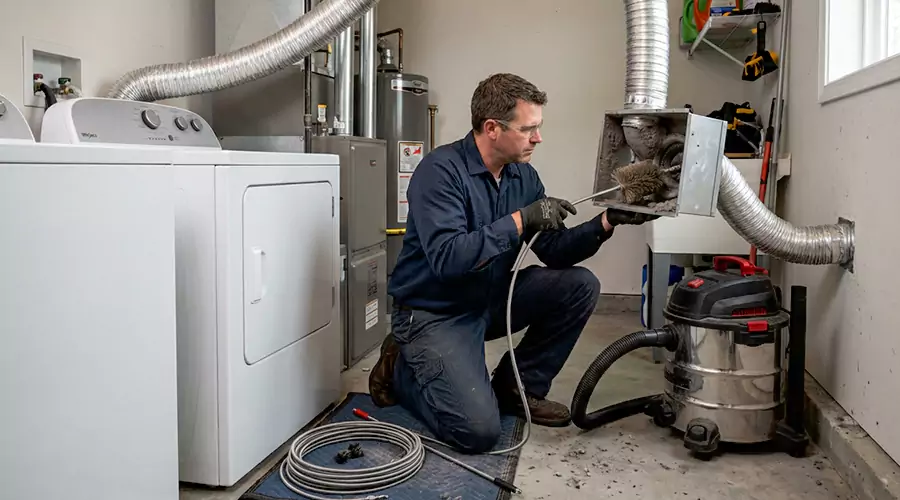
A professional typically inspects the duct route, identifies accessible connections, and checks the exterior termination. Specialized tools remove lint and debris from the exhaust passage. The technician may also identify crushed sections or inappropriate materials that need replacement. Cleaning cannot correct a permanently damaged duct.
After completing the work, the contractor should verify that the duct is reconnected securely and that exhaust airflow is satisfactory. A long or roof-terminated system may require additional tools and access precautions.
How Often Should Dryer Vents Be Cleaned?
The NFPA recommends cleaning dryer exhaust pipes once a year or more often when drying performance declines. The U.S. Fire Administration also recommends annual vent duct cleaning. The lint screen requires more frequent maintenance and should be cleaned after every load. This does not replace cleaning the exhaust duct.
Households with frequent laundry use, heavy-lint fabrics, or complicated vent routes should monitor for restrictions between scheduled cleanings.
How Can You Prevent Dryer Vent Blockages?
Prevention involves both regular maintenance and correct exhaust installation.
Useful practices include:
- Cleaning the lint screen after every load.
- Keeping the dryer area free from accumulated lint.
- Inspecting the exterior vent hood periodically.
- Preventing the connecting duct from being crushed.
- Using approved metal exhaust materials.
- Keeping the vent route as short and direct as permitted.
- Avoiding overloaded dryer cycles.
- Scheduling annual exhaust duct cleaning.
Do not direct conventional dryer exhaust into an attic, crawlspace, or other indoor area. The exhaust should terminate outdoors according to the manufacturer's instructions and applicable codes.
Conclusion
Clogged dryer vents commonly cause longer drying times, excessive heat, weak outdoor exhaust airflow, and moisture problems. Burning odors, smoke, and abnormal overheating require immediate attention rather than another drying cycle. The blockage may involve lint, damaged ductwork, or the exterior termination. Regular filter cleaning and annual exhaust maintenance help reduce preventable restrictions. If warning signs continue after basic maintenance, arrange professional dryer vent inspection before operating the appliance again.